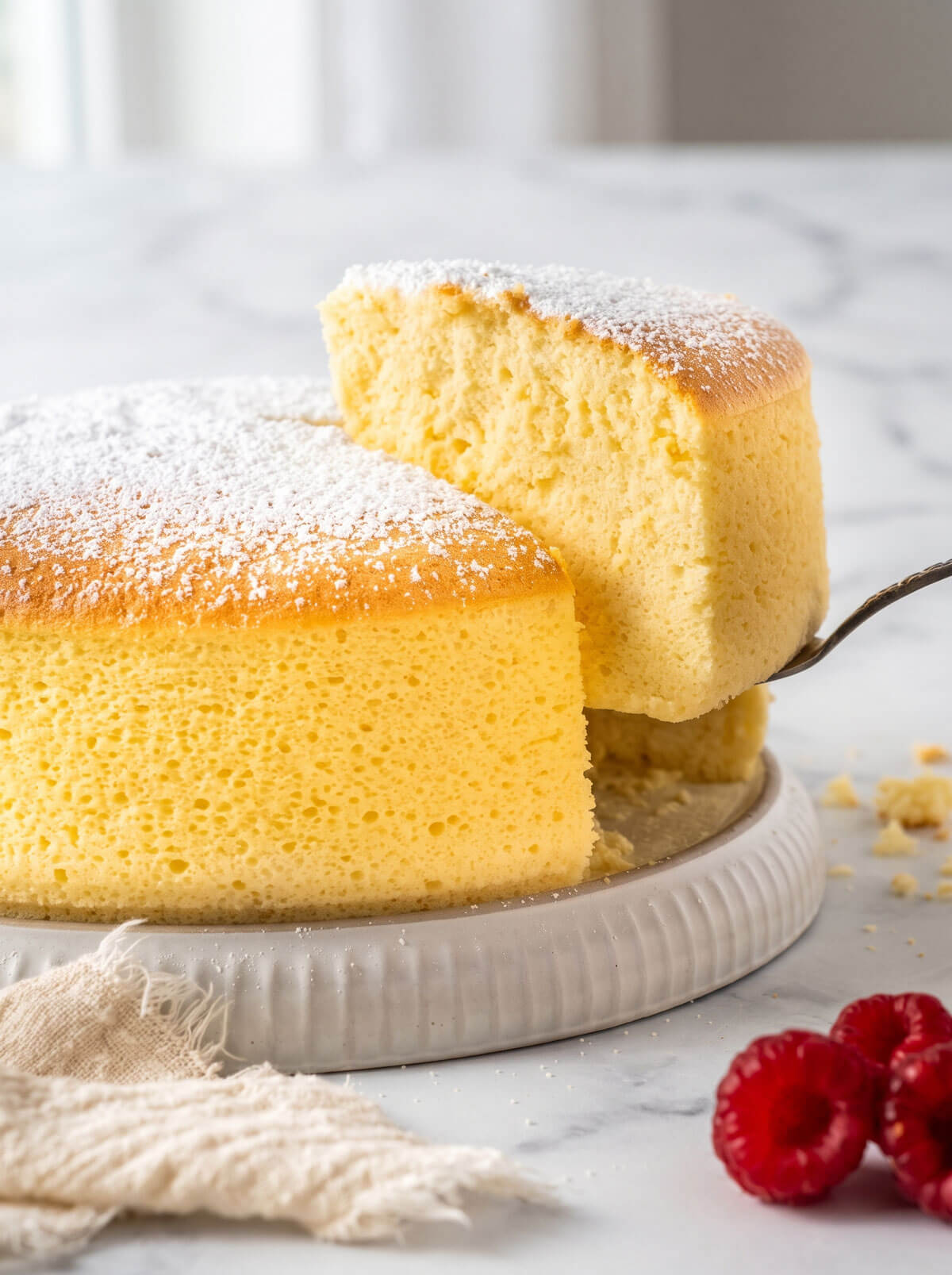
This Japanese Cotton Cheesecake is everything a cheesecake lover dreams of: soft, fluffy, delicate, and wonderfully light. Unlike traditional New York-style cheesecake, this beautiful Japanese version has a cloudlike texture that gently jiggles when you move the pan and practically melts in your mouth.
Made with cream cheese, milk, butter, flour, and eggs, this cake gets its signature airy texture from carefully whipped egg whites folded into a smooth cream cheese batter. The result is a beautifully tender cake with a subtle sweetness, a creamy flavor, and a delicate golden top.
What makes this recipe a keeper is its lovely balance of richness and lightness. It has the comforting taste of classic cheesecake without feeling overly heavy. It’s perfect for afternoon tea, special occasions, family gatherings, or whenever you’re craving something sweet but delicate.
Serve it slightly warm for a soft, tender bite, or refrigerate it for a firmer, creamier texture. A light dusting of powdered sugar makes a simple and elegant finishing touch.
Love this fluffy Japanese cheesecake? Pin it to your Dessert Recipes board on Pinterest so you can make it again whenever a cheesecake craving strikes!
Why You’ll Love This Recipe
- Cloudlike Texture: Whipped egg whites create an incredibly airy cake that feels light with every bite.
- Perfectly Balanced Sweetness: Cream cheese provides a gentle tang that complements the sweetness without overwhelming it.
- Simple Ingredients: Made with familiar baking staples that are easy to find at most grocery stores.
- Beautiful Presentation: Its delicate golden top and soft, jiggly center make it an elegant dessert for gatherings.
- Delicious Warm or Cold: Enjoy it fresh from the oven or chilled for a richer, firmer cheesecake experience.
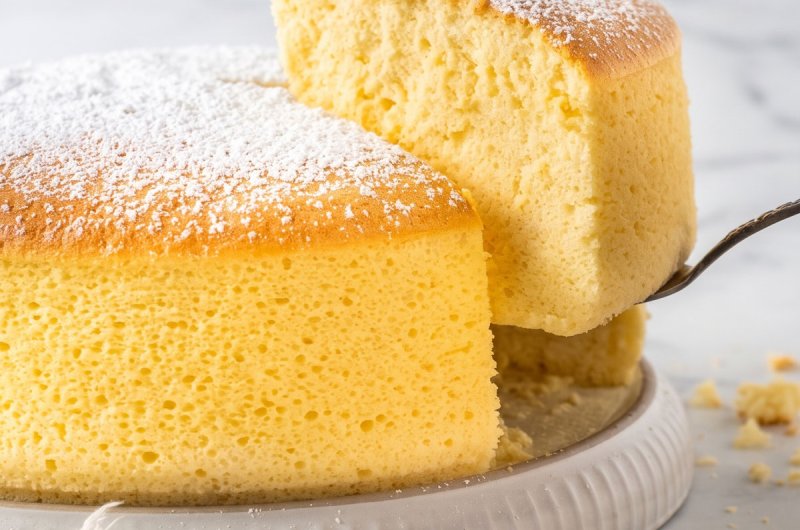
Japanese Cheesecake
A delicate, airy Japanese cheesecake made with cream cheese, butter, and whipped egg whites. Lightly sweet, beautifully fluffy, and irresistibly creamy.
8
slices25
minutes1
hour10
minutes266
kcalIngredients
- Cream Cheese Mixture
200 g (7 oz) cream cheese, softened
⅔ cup whole milk (152 ml)
5 tbsp butter (70 g), unsalted
½ cup + 1 tbsp all-purpose flour (70 g), sifted
- Egg Mixture
4 large eggs, separated
⅓ cup + 1 tbsp granulated white sugar (80 g)
- For Serving
Powdered sugar (Optional), for dusting
Directions
- Prepare the Ingredients: Separate the egg yolks from the egg whites. Place the egg whites in a clean, dry mixing bowl and set aside. Preheat the oven to 150°C / 300°F.
- Make the Cream Cheese Mixture: Combine the cream cheese, milk, and butter in a heatproof bowl. Gently heat over a double boiler, stirring until everything melts into a smooth, creamy mixture.
- Add the Flour and Egg Yolks: Remove the mixture from the heat and allow it to cool slightly. Sift in the flour and whisk until smooth. Add the egg yolks one at a time, mixing until fully incorporated.
- Whip the Egg Whites: Using a clean mixer bowl, beat the egg whites until foamy. Gradually add the sugar while continuing to beat. Whip until medium-stiff peaks form. The meringue should look glossy and hold its shape.
- Combine the Mixtures: Gently fold one-third of the whipped egg whites into the cream cheese mixture to lighten it. Add the remaining egg whites in two batches, folding carefully to preserve as much air as possible.
- Prepare for Baking: Pour the batter into a prepared cake pan, gently smooth the surface, and tap the pan lightly to release large air bubbles.
- First Baking Stage: Bake at 150°C / 300°F for 20 minutes in the preheated oven.
- Second Baking Stage: Slightly crack the oven door and continue baking for another 25 minutes, following the original recipe’s baking method.
- Final Baking Stage: Close the oven door and increase the temperature to 160°C / 320°F. Bake for another 25 minutes, or until the cake is set and lightly golden.
- 10. Cool and Serve: Remove the cheesecake from the oven and allow it to cool gently. Serve warm or chilled, with a light dusting of powdered sugar if desired.
Cooking Notes
- Room-Temperature Ingredients: Allow the cream cheese and eggs to reach room temperature before starting. This helps create a smoother batter.
- Avoid Overheating: Gently melt the cream cheese, milk, and butter. Excessive heat can affect the texture when the egg yolks are added.
- Don’t Overwhip the Meringue: Medium-stiff, glossy peaks are ideal. Very dry meringue can be difficult to incorporate evenly.
- Fold Gently: Use a spatula and a gentle folding motion. Overmixing can deflate the egg whites and produce a denser cheesecake.
- Use a Water Bath if Needed: A water bath is a common technique for Japanese cheesecakes that helps maintain gentle, even heat. However, it is not specified in the original baking method.
- Watch the Oven Temperature: Oven-door positions and temperature changes can affect baking performance. Follow the stated timing while checking that the cake is properly set.
- Cool Gradually: Sudden temperature changes can cause the cheesecake to shrink or collapse.
- Serving Tip: Refrigerating the cake produces a firmer, creamier texture, while serving it slightly warm gives it a softer consistency.
Nutrition
Estimated nutrition
Yield: 8 servings
Estimated finished batch weight: approximately 680 g, allowing for moisture loss during baking.
Recommended serving size: approximately 85 g per slice.
Estimated Nutrition per Serving
- Calories: 266 kcal
- Fat: 18.8 g
- Carbs: 18.8 g
- Protein: 6.1 g
Nutrition estimates use standard ingredient composition values and assume eight equal servings. Actual values vary with the brands of cream cheese, milk, and butter used. Optional powdered sugar is not included.
Recipe Science
Japanese cotton cheesecake is a baked dessert that combines cream cheese, milk, butter, flour, egg yolks, and a separately whipped egg-white meringue. Its defining characteristic is its airy structure, which distinguishes it from conventional dense cheesecakes.
The texture depends on the stability of the egg-white foam. Whipping egg whites incorporates air, while gradually adding sugar helps stabilize the foam. Folding the meringue into the cream cheese mixture distributes these air bubbles throughout the batter. During baking, the trapped air expands, contributing to the cake’s characteristic height and soft interior. The combination of cream cheese and butter provides richness, while flour supplies enough structure to support the delicate crumb.
The relatively long, staged baking process allows the cake to cook gradually. Temperature consistency is important because excessive heat can cause uneven expansion and cracking. The cake can be served warm or chilled, depending on the preferred texture. Refrigeration firms the crumb and makes slicing easier. Store leftovers covered in the refrigerator for up to 3 days. Reheat individual portions gently if a softer serving texture is preferred.
Dietary Notes and Health Considerations: This dessert contains dairy, gluten, eggs, and added sugar. Its estimated saturated fat content is approximately 11 g per serving, exceeding 20% of the FDA Daily Value of 20 g. This qualifies as High in saturated fat. People monitoring saturated fat intake may consider using reduced-fat cream cheese and replacing some butter with a suitable lower-saturated-fat alternative. The estimated added sugar is approximately 10 g per serving, or 20% of the 50 g Daily Value. Enjoying a moderate portion can help balance dessert consumption within an overall eating pattern.