These crispy fried onions are thin, golden, and wonderfully crunchy; a simple kitchen trick that makes homemade onion crisps last longer. Each slice develops a delicate, lightly crisp coating with a naturally sweet onion flavor and a satisfying crunch.
The secret is in the preparation: slice the onions thinly, coat them evenly in all-purpose flour, and fry them at 335°F (167°C). Keeping the oil at the right temperature helps the onions fry evenly and develop a beautiful golden color.
These crispy onions are a fantastic topping for burgers, hot dogs, salads, sandwiches, casseroles, and rice dishes. They’re also delicious as a crunchy snack straight from the bowl!
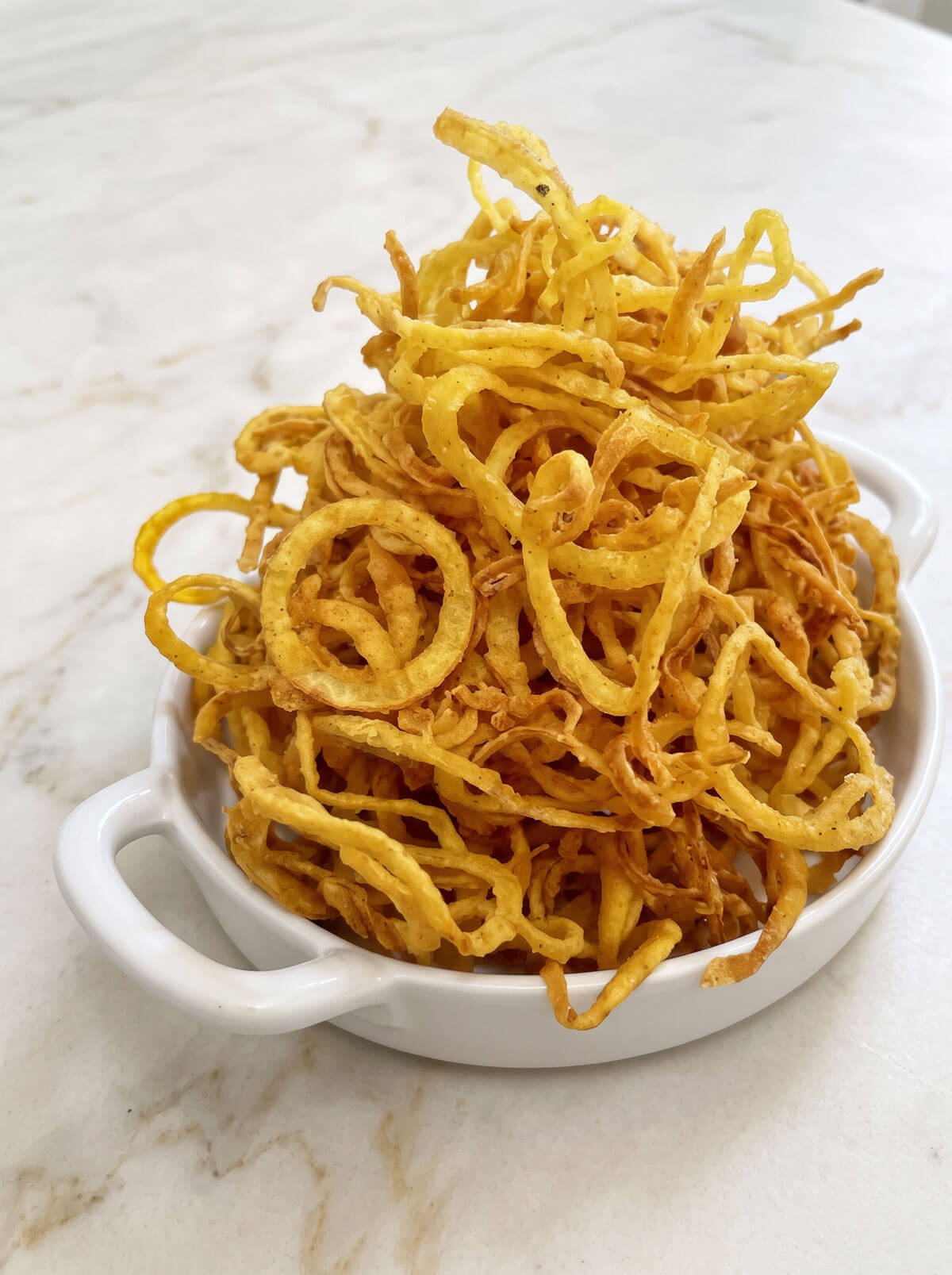
Love this easy crispy onion trick? Save it to your Pinterest recipe board so you can make perfectly crunchy onions whenever you like!
Why You’ll Love This Recipe
- Simple Ingredients: Just onions, flour, and oil.
- Extra Crunchy: A light flour coating creates a satisfying crispy exterior.
- Versatile Topping: Perfect for burgers, salads, sandwiches, and casseroles.
- Easy to Make: No complicated equipment or special techniques required.
- Make-Ahead Friendly: Prepare ahead and store in an airtight container once completely cooled.
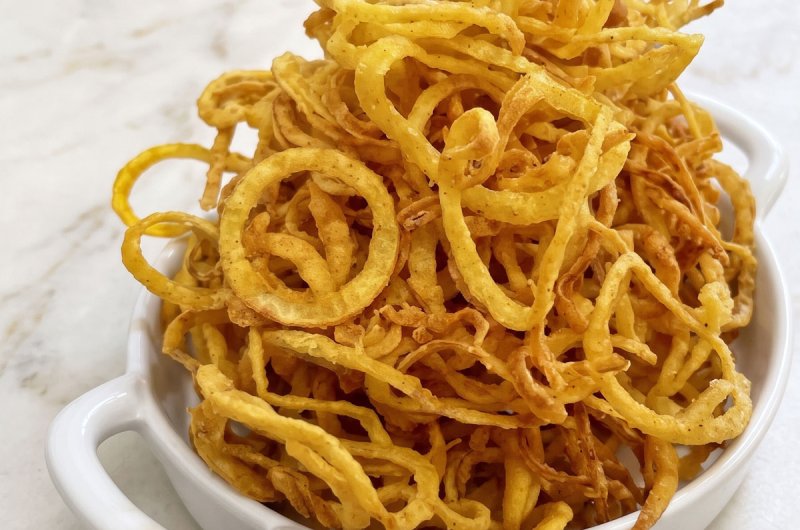
crispy fried onions
Course: AppetizersCuisine: AmericanDifficulty: Easy8
servings10
minutes15
minutes105
kcalThinly sliced onions coated in flour and fried until golden and crispy for a delicious, crunchy topping.
Ingredients
1 lb yellow onions, thinly sliced
1 cup all-purpose flour
2 cups vegetable oil, for frying (approximately; as needed)
Salt, to taste (optional)
Directions
- Slice the onions: Peel the onions and slice them into very thin, even strips.
- Coat with flour: Separate the onion slices and toss them with all-purpose flour until evenly coated. Shake off excess flour.
- Heat the oil: Heat vegetable oil in a deep, heavy-bottomed pan to 335°F (167°C).
- Fry until crispy: Add the onions in small batches. Fry until golden brown and crisp, stirring gently to prevent sticking.
- Drain and cool: Remove the onions with a slotted spoon and place them on a wire rack or paper towels. Allow them to cool completely.
- Store properly: Once completely cool, transfer to an airtight container to help preserve their crunch.
Cooking Notes
- Slice evenly: Thin, uniform slices cook more consistently.
- Avoid overcrowding: Fry in small batches to prevent the oil temperature from dropping.
- Watch the temperature: Maintain approximately 335°F (167°C) for even frying.
- Remove at the right time: Take the onions out when golden brown; they can darken quickly.
- Cool completely: Trapped steam can make crispy onions soggy.
- Storage: Keep in an airtight container in a cool, dry place. Crispness and storage life depend on moisture and storage conditions.
Nutrition
Estimated Nutrition per Serving
Yields: 8 servings.
Suggested serving size: Approximately ¼ cup.
- Calories: 105 kcal
- Fat: 7 g
- Carbs: 9 g
- Protein: 2 g
Nutrition estimates are approximate and depend on the amount of flour and oil absorbed during frying.
Recipe Science
Crispy fried onions are made by coating thinly sliced onions with all-purpose flour before frying them in hot vegetable oil. The flour creates a light exterior coating that contributes to the finished texture.
The frying process removes moisture from the onion slices while browning the flour coating. Maintaining an oil temperature of approximately 335°F (167°C) supports consistent cooking and helps produce a crisp exterior. Frying in small batches also helps prevent excessive temperature fluctuations.
For everyday cooking, these onions work well as a finishing ingredient for burgers, salads, sandwiches, soups, and casseroles. They should be cooled completely before storage to minimize trapped moisture. Airtight storage helps preserve their texture, although homemade fried onions may gradually soften over time.
Dietary Notes & Health Alerts: These onions are vegetarian but are not suitable for gluten-free diets when prepared with regular wheat flour. Deep-frying also increases their fat content. For a lighter variation, consider using an air fryer with a light coating of oil. Sodium content depends on whether salt is added; saturated fat and added sugar are generally not major contributors unless different ingredients are used.