This Japanese-inspired Warm Beef Salad is a fresh, colorful dish that brings together tender, savory beef and crisp vegetables with a delicious Asian-style soy garlic dressing. It’s a wonderful combination of warm and cool textures, with juicy tomatoes, crunchy cucumbers, sweet bell peppers, and aromatic fresh herbs in every bite.
The real magic is in the contrast of flavors. Savory beef, fragrant garlic, salty soy sauce, and a little heat from red and black pepper create a bold dressing that brings all the ingredients together. Fresh cilantro and parsley add a bright, herbaceous finish that makes the salad taste light yet satisfying.
What makes this recipe a keeper is how easily it comes together. It’s perfect for a family dinner, a quick weekday meal, or a festive table when you want something a little different. You can serve it as a warm main-course salad or alongside rice and other Asian-inspired dishes.
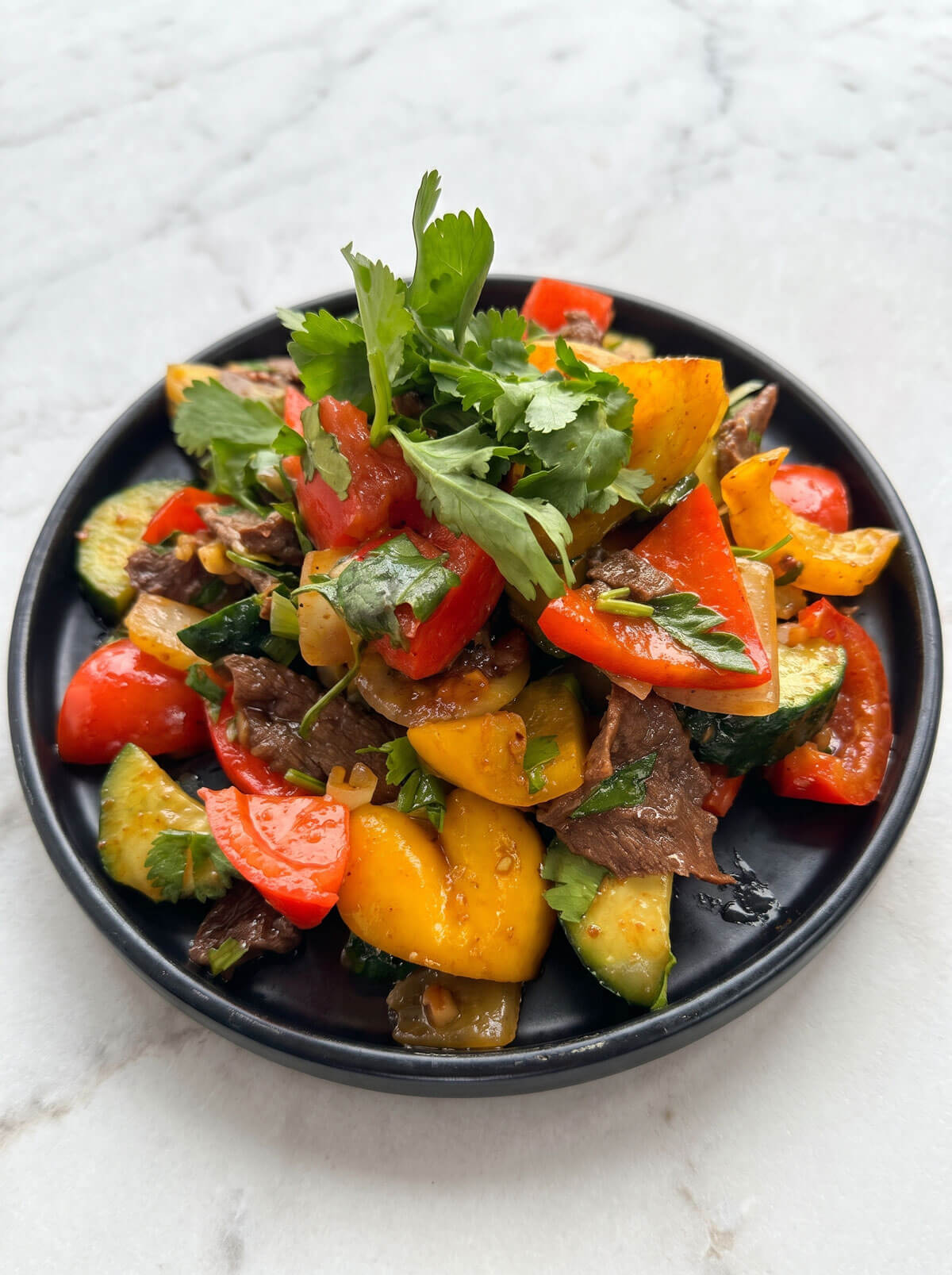
Love fresh, flavorful Asian-inspired salads? Save this Japanese Warm Beef Salad to your Pinterest dinner board so you can make it again!
Why You’ll Love This Recipe
- Quick and Easy: A delicious meal that requires minimal preparation and only a few minutes of cooking.
- Wonderful Flavor Combination: Savory beef, garlic, soy sauce, and fresh herbs create a satisfying Asian-inspired flavor.
- Fresh and Colorful: A beautiful mix of vegetables makes this salad appealing on both everyday and special-occasion tables.
- Versatile Serving Options: Enjoy it on its own, with steamed rice, or as part of a larger Asian-inspired meal.
- Easy to Customize: Adjust the spice level, vegetables, and herbs to suit your preferences.
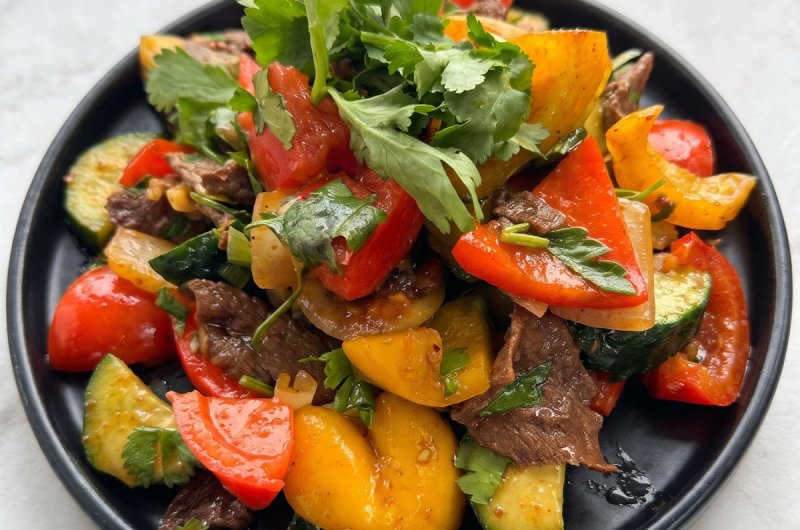
Japanese salad with marinated beef
Course: DinnerCuisine: JapaneseDifficulty: Easy4
servings15
minutes10
minutes240
kcalA vibrant Asian-inspired salad featuring tender stir-fried beef, fresh vegetables, aromatic herbs, and a savory soy garlic dressing.
Ingredients
- Main Ingredients
10.5 oz beef, thinly sliced
10.5 oz cucumbers, sliced
10.5 oz tomatoes, cut into wedges
2 medium bell peppers, thinly sliced
1 medium onion, thinly sliced
¼ cup fresh parsley, chopped
¼ cup fresh cilantro, chopped
- For the Dressing and Seasoning
2 tbsp soy sauce
2 cloves garlic, minced
1 tbsp neutral cooking oil
¼ tsp red pepper flakes, or to taste
¼ tsp ground black pepper
Directions
- Step 1: Prepare the Vegetables
- Wash and dry all the vegetables. Slice the cucumbers, tomatoes, and bell peppers. Thinly slice the onion and chop the fresh parsley and cilantro. Set aside.
- Step 2: Cook the Beef
- Heat the cooking oil in a large skillet over medium-high heat. Add the thinly sliced beef and cook for approximately 4–6 minutes, stirring occasionally, until browned and cooked through.
- Step 3: Add the Aromatics
- Add the minced garlic and sliced onion to the skillet. Stir-fry for 1–2 minutes until fragrant and the onion begins to soften.
- Step 4: Season the Beef
- Pour in the soy sauce. Add the red pepper flakes and black pepper. Stir well so the beef is evenly coated in the savory garlic sauce.
- Step 5: Assemble the Salad
- Transfer the warm beef mixture to a large serving bowl. Add the sliced cucumbers, tomatoes, and bell peppers. Gently toss to combine.
- Step 6: Add Fresh Herbs and Serve
- Sprinkle the chopped parsley and cilantro over the salad. Toss gently and serve immediately while the beef is still warm.
Cooking Notes
- Slice the beef thinly: This helps it cook quickly and remain tender. Slicing against the grain is especially helpful.
- Avoid overcrowding the pan: Cook the beef in batches if necessary to encourage browning.
- Keep the vegetables fresh: Add cucumbers and tomatoes after cooking so they retain their natural crunch and juiciness.
- Adjust the seasoning: Soy sauce provides plenty of salt, so taste before adding any extra.
- Control the heat: Reduce the red pepper flakes for a milder salad.
- Gluten-free option: Use certified gluten-free tamari instead of regular soy sauce.
- Make ahead: Prepare and refrigerate the chopped vegetables separately. Cook the beef just before serving for the best texture.
Nutrition
Estimated values per serving; based on 4 servings and approximately 1 tbsp cooking oil.
Total Yield: 4 servings
Recommended Serving Size: Approximately 300 g per serving.
Estimated Nutrition per Serving
- Calories: 240 kcal
- Fat: 12 g
- Carbohydrates: 13 g
- Protein: 22 g
Nutrition is approximate and will vary depending on the cut of beef, soy sauce brand, and actual ingredient quantities.
Recipe Science
This Japanese-inspired warm beef salad combines thinly sliced beef with fresh cucumbers, tomatoes, bell peppers, onions, and aromatic herbs. The beef is quickly stir-fried with garlic and soy sauce, then combined with uncooked vegetables to create a dish with contrasting temperatures and textures.
The cooking method is designed to preserve freshness while developing savory flavor. High-heat cooking allows the beef to brown efficiently, while garlic releases its aromatic compounds into the cooking oil. Soy sauce contributes saltiness and umami, complementing the natural sweetness of the vegetables. Adding fresh vegetables after cooking prevents excessive softening and preserves their crisp texture.
This salad is suitable for everyday meals because preparation is straightforward and cooking time is short. For meal preparation, store the cooked beef separately from the fresh vegetables in airtight containers in the refrigerator. Refrigerate promptly and consume within 3–4 days. Reheat the beef thoroughly before combining with freshly prepared vegetables.
Dietary Notes & Health Considerations: Soy sauce can contribute substantial sodium. Sodium intake should be considered against the FDA Daily Value of 2,300 mg. The recipe’s estimated sodium content is approximately 450–550 mg per serving, depending on the soy sauce used. This is below the 20% DV threshold for a high-sodium designation. Using reduced-sodium soy sauce can lower the amount further. The dish also provides protein, vitamin C, and fiber from its combination of beef and vegetables.